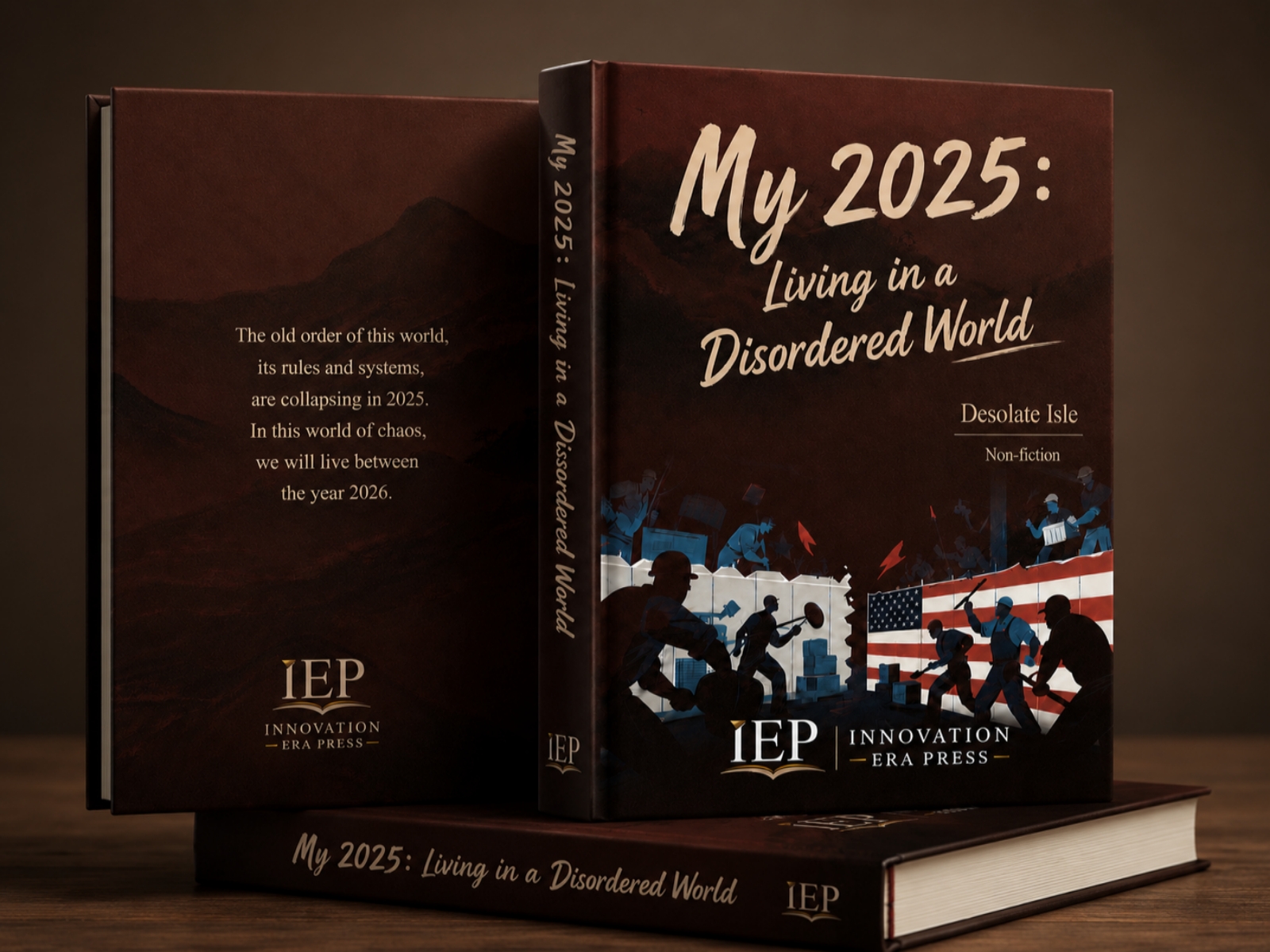

——An excerpt from Us in a World Out of Order: How asylum seekers are turned into commodities for private prison contractors and political KPIs.
In a small room on the same floor as the immigration court, I met the four people who would see me: a white woman, an Asian man, an Asian girl, and a Taiwanese woman handling the Chinese interpreting. I asked whether they were legal-aid lawyers, and was told no—they were all, the interpreter included, employees of the US government. They said they had come to understand my situation, and could also provide me necessary help.

I told them this was very welcome—I did indeed have questions and doubts, and needed their help. The Asian man searched in his handheld terminal and said the ICE officer in charge of me was a Ms. Vilson; if I needed any help, he would submit my questions to Vilson and have her help me as best she could.
They asked me to begin by saying what help I needed. I quickly generated the order and logic of my questions in my mind, and said to them:
“First, I find it very hard to understand—why detain me? Simply because I said I was afraid to go back to China but could go to Hong Kong, and Hong Kong is also a city under China’s jurisdiction, am I to be detained? It’s as though I came to your door and said I was afraid to go home for fear my family would scold or beat me—is that your reason to hold me in your house and not let me leave? If the US government thinks I ought to be granted asylum, then it ought to give me freedom, not take my freedom away. As a writer, I’ve committed no crime, done nothing to harm society, and to be detained like this with no definite time limit is a thing I find too painful to bear. I, a man in pursuit of democracy and freedom, have lost my freedom in America.
“Second, I applied for voluntary departure, and the ICE officer told me I had to leave it to the judge’s ruling in court. I said my mother was gravely ill, that I wanted to waive the hearing and not want asylum, and the ICE officer said no. Going to court, appealing—both mean I’d be detained still longer, and just how long I’d be detained, I don’t know. The laughable thing is that your US government detains a person and yet cannot give a definite time frame. I arrived at US customs holding a valid visa; I don’t believe I’ve committed a crime—at most an attempt or a fault—so why can’t I be allowed to leave as soon as possible? If I’d truly committed a crime, there’d be another legal procedure, a separate matter; and to keep me under watch during the asylum phase, there are more technological means too. The US government detaining people this way now, by policy and procedure, violates the spirit of humanity, and violates the will of the God that President Trump professes to believe in.
“Further, my bond hearing failed because the government lawyer said the judge had no jurisdiction—did CBP not know, when it arranged the bond hearing for me, whether the judge had jurisdiction? Right now I urgently want to see my gravely ill old mother at the soonest, and I want to be allowed to buy my own ticket and fly to Hong Kong, which belongs to China—besides, I came from Hong Kong in the first place.”
The Asian man said: “We understand your doubts and your questions, and will pass them to Vilson, and try to have her help you. But you’ll still have to wait until the hearing on the twenty-first for the judge’s ruling. The US government’s detention of you is temporary, because you meet the conditions for asylum—this is the carrying-out of US government procedure.”
As I talked I spread out the materials and letters CBP had given me; being in English, most of the contents I did not understand. The white woman took the materials and looked them over and over, then pointed at several pages and said: “Why do you have these materials?”
“Some of them the CBP police gave me during detention; some are the bond-hearing notice and documents CBP mailed me,” I answered.
“Some of the documents in here are things you may not hold, still less take out of the prison—their contents touch on US government case secrets.” The white woman would no longer allow those materials back into my hands.
They next asked me to talk about the experiences of my life, the reasons and the content of my asylum application. It could unfold in the form of an everyday chat, and when they needed to they would break in to ask about the things that concerned them.
Over the next three hours or so, I was led, willing or not, to lay out my experiences and my history. From finishing middle school to teaching myself up to professor; from laboring for hire to starting a business; from a love of writing to becoming a columnist and an author of published books; from the content of my work to technical invention; from publishing my views to having my freedom of speech restricted. They asked more, too, about the content of my writing—on politics, economy, employment, education, and the rest—and my views on the Russia-Ukraine war, the Israel-Palestine conflict, the Taiwan question. When it came to military matters, I said I had no interest in the military and wrote no articles or views on it. Some of the key questions I had no choice but to answer, the exchange running as follows:
“I am someone who came up out of a rural, peasant, agrarian social setting, and I know deeply how hard-won is everything China has today. In it is the toil, the blood and sweat, of countless Chinese who went from peasant to worker; and in it is America’s cooperative support, from supplying fertilizer production lines to supplying education, science and technology, and trade. Yet China’s ruling party and government always insist on crediting everything to Reform and Opening, taking the closed-door isolation that should never have existed and making it an excuse, taking the freedom that should have been given to the people and the market in the first place and calling it an achievement. While singing its own praises, leading the great collective hymn, that great chief architect of Reform and Opening, Deng Xiaoping, all the while held firm that China must walk an economic line with public ownership as the mainstay, and opposed bourgeois liberalization. And the result? It left the seed, buried the root of disaster, until it set off today’s leaders running history backward in the name of reform—reforming back to the old model of public-ownership-led economy. The private-economy line was plainly proven right in practice, walked well, the common people all grew richer, the whole world benefited—so why must the Chinese Communist Party reform it back? Even if the private economy and private enterprise carried this or that original sin, this or that fault, those were caused by an unsound legal system and an imperfect market mechanism in a period of rapid development, and ought to be given room for error; the legal framework could perfectly well be further perfected and made whole, the market mechanism regulated—rather than running backward. The one who drives history’s car in reverse makes everyone climb aboard that car and ride back into a stage of history—and that stage is a stage of suffering, made by an error of direction and of line.
“China’s peasants suffer too bitterly, too bitterly. As a former peasant myself, my own family knew village cadres coming to the door to seize our grain by force, drive off the pigs by force, lead away the goats by force; the family had no grain to eat, no money to buy cooking oil, no money to buy cloth for clothes, and still the retained levy set by the government had to be handed over first, in full. In those days what the village cadres preached to the old peasants was that in every dynasty through history one paid the imperial grain and the state tax—right and proper as heaven itself. I saw with my own eyes, too, a pregnant woman in my neighbor’s house forced to abort a baby seven months along; had she not yielded, a pack of cadres before the neighbor’s door would, at one command, have leveled the house and all the family’s property with a bulldozer. All of this, all of it—after industry rose, the cities rose, science and technology rose, the economy rose—not only brought no return, no nurture back to the peasants, but went on making the peasants bear it, contribute it. The peasants get no good education, no good medical care, no pension money, and the village house-plot land is restricted from being priced and put into circulation. Every year peasants, countryside, and agriculture are made into the ‘three rural issues,’ but in essence, to my eyes, it is the deliberate fixing-in-place of the ‘three rurals,’ so that the ‘three rurals’ can never turn over and win real change.
“China has very, very many more problems and hidden dangers. The generation of young people who are at once the ‘millennials,’ ‘Gen Z,’ and the ‘left-behind children’—perhaps tens of millions of them, perhaps more than a hundred million—are walking, and about to walk, into a consuming, loss-making society. They sit at the bottom of society, work hard to find, business hard to do, and at the least misfortune must face the hopelessness of a whole life. Though China’s social system has its successes who rise up from the bottom—such as the political, academic, inventive, and entrepreneurial halo and achievements I hold—only I know what an extremely low probability of success that road is: one in a hundred thousand, one in a million, and no exaggeration. What can truly make the common people’s lives good is enlightened thought, diverse occupations, a free and open market environment—not, for the sake of holding power, the working of stances, of struggle, of setting oneself against this group and that.
“As a Chinese citizen, in my articles and videos and other work, I raise sharp and pointed criticism of China’s political and social problems, with fact, with truth, with logic. That does not mean I betray or turn reactionary; it means I hope the party and government will make changes, make the country and society better, let the common people benefit. Your American, Russell, wrote a book a full hundred years ago, The Problem of China—very objective, very true. Why is it that in these last few years especially many Chinese seek by every means to emigrate to America, while five years ago, ten years ago, it was relatively few? It is because China’s political line and its struggle movements have made crisis and disaster for too many people, and American society has long been the benchmark for many Chinese—America’s loose immigration policy and free social environment can give those Chinese in crisis and disaster a new life. You may find it hard to understand the persecution that Chinese politics works on some of the common people; perhaps there isn’t much evidence of torture, but political persecution shows itself in more than torture—the non-torture, the indirect and hidden harm that isn’t direct, often drives a person into a dead end just the same.
“Many US government officials and Americans, including California Governor Newsom, when they travel to China—whether arranged in advance for them or arranged in advance by themselves—will often marvel at China’s urban and architectural achievements. What you Americans don’t see, however, is that it is exactly those seemingly magnificent buildings, those huge achievements, that have hollowed out the blood and sweat of nine hundred million able-bodied working-age people, making more than eighty percent of the common people outside the state system into ignorant, willing contributors. America’s waging of a trade war, a tech war, a finance war on China has caused both countries to reduce or even cut off political and academic exchange, and many American officials and scholars rely on reading public data, using public data to judge Chinese society and economy. And the fact? In a bureaucratic system, a hierarchical society, where is there a target deployed from a higher level to a lower that anyone dares fail to meet? In China it’s called a political task. To complete the political task, local governments and state enterprises at every level use the methods of watering-down, faking, false reporting, under-reporting, or by every kind of means lure and coerce enterprises of all sorts into filling in the figures, contriving by hook or crook to meet or exceed the data targets. The better the task target is met, the plainer the official’s political record, the more he can be promoted and put to use, the more he can graft and amass. In my articles, I sometimes say it straight, sometimes say it with irony. Here today, I hope too that your US government can do more field research on China’s present state, understand more of the facts of China’s present state. American-style democracy and freedom ought to be built on foundation and fact, not on a light faith in political data.
“I am a political neutral, but that does not stop me from once having strongly backed President Trump, because the governing program of his campaign was built around the people’s livelihood, and above all the livelihood of the people at the bottom. But now, what I see is this: in the CBP work hall hang giant photographs of President Trump and Vice President Vance, some staff have Trump’s name written on their dress—a great working-up of a personality cult, a support for centralized and totalitarian rule. In many of your American states, I’ve seen too much hardship of livelihood and too many social problems, the kind brought on by central concentration of power, by elections that seem to be the majority’s votes but are in fact a minority’s taking part, by the bureaucratic system and the rest. President Trump simply and crudely lays all the country’s domestic social problems on immigrants, and all the problems of international competition on tariffs. To speak of the immigration policy alone, the objects of the immigration war and the arrests, the objects of the harm, are all the people at the bottom of society. This wholly fails to accord with the democracy and freedom America advocates across the world, and with what Christianity teaches all mankind—to love others as oneself, to be good to others, honest, just, holy.
“By my own experience and understanding, though the US government defines this place as a detention center, marks Detainee on the backs of our jackets, in fact it is a prison. As a nation of immigrants, apart from the small number of native American aboriginals, the vast majority of Americans are immigrants and the descendants of immigrants. And now, a great many new immigrants or refugees who came in accordance with US immigration policy are, during the period of arrest and review, against the objective facts, all treated alike as illegal immigrants.
“The Russia-Ukraine war is the naked aggression of Russia against Ukraine; it needs no discussion at all. War between states should occur only to uphold justice and to stop evil—does the Ukrainian government have any substantive domestic or international evil conduct? Plainly not. Putin launched the war on the grounds of a fantasy, an imagined enemy; if that isn’t aggression, what is it? The Israel-Palestine war—the Hamas militants first carried out an inhuman, mass evil against Israel’s civilians; is one to not stop it, to let the evil run? Of course, a just war too must weigh the targets and the scope of its strikes, and reduce harm to the innocent as far as possible. The Taiwan question I hold to be a problem left over from history; the people of Taiwan have long walked the road of democracy and freedom, and so the more than twenty million people of Taiwan should be left to make their own choice.”
My telling needed to go through the interpreter in short sentences. The content of the exchange was also the necessary product of the other side’s questioning and leading, each in turn. The process took a long time.
We all said we did not need lunch and could go on talking. Then I was taken into the small room next door, to wait apart, sitting still less than ten minutes, and after the other side conferred in a meeting I was brought back again.
This time, the other side stated outright that for the questions to follow, I had to answer truthfully. If my answers or my account were untrue, I would bear legal responsibility. I realized at once that a talk like this was “vetting,” not “aid.” I asked too that the other side tell me their true identity and purpose, and they produced work credentials, stating they were employees of the US government. I asked whether it would become evidence in the court to come, and they answered it had nothing to do with the court. Of course, there was no longer any meaning in my asking or saying more—I was, after all, a detained prisoner, whether or not I was guilty.
“Explain this photograph of you in military uniform—are you an active-duty serviceman?” The Asian girl drew from the folder a half-length photo of me in military uniform and handed it to the Asian man to do the asking.
“I remember this photo; it was probably shared in an article on my Sina blog over ten years ago. I am not an active-duty serviceman, but I was once a soldier.”
“When and where did you serve? What branch?”
“From 1994 to 1996, on the Qinghai-Tibet Plateau—the place where American GIs force-landed in the Second World War, called the forbidden zone of life. I served only three years, an ordinary soldier; apart from study and training, it was sentry duty and patrol and the like.”
“But the photo shows you wearing an officer’s uniform, the breast badge too blurred to read—it looks like two characters, like your name.”
“That’s a reserve officer’s uniform. In China, all discharged servicemen are entered into the reserve, and government cadres who hold a post are issued a kind of custom-made officer’s uniform. That was during one August First Army Day—I put on someone else’s reserve uniform to pose for a photo, to play at it. People who’ve been soldiers have that sort of sentiment. If I were truly a serving officer in the forces, there’s no way I’d take a photo and post it online.” This explanation of mine seemed not to satisfy the other side; they tried over and over to make out the name on the badge in the photo, but it was simply too blurred to read.
“Then when you described your history earlier, why did you conceal having been a soldier?”
“Earlier you gave me the feeling of just chatting casually; though your exchange did force me to tell a great deal of my life, that stretch of history as a soldier wasn’t important, and I usually don’t care to speak of it to strangers. It puts me in a very bad frame of mind, my emotions out of control.”
“You must say it, and you may not lie.” The other side made a clear demand, and at the same time picked up the electronic device on the table to check it; I realized it was an instrument for recording and monitoring.
In that instant tears ran down, my emotions out of control, and I choked, sobbing, for a full two or three minutes; the Asian girl handed me a tissue, signaling me to go on once I’d settled.
“That is a past carved into my bones, and a very dark one. When I was young, taking the school exams and joining the army were the chances for a peasant’s child to leap clear of the village gate. The army quotas were always limited, the young men wanting to enlist always many; whoever’s family had power or money or connections got priority, and the competition was fierce beyond measure. To satisfy my wish to enlist, my parents sold off all the family’s grain and livestock and, with borrowing on top, spent more than two thousand yuan (worth four to five hundred US dollars at the time) on gifts and on working connections—a sum equal to two or three years’ wages of a town worker back then. The day I joined up, the house stood bare to the walls, the family in the straits of having no rice for the pot. I knelt before my parents and vowed to make something good of myself in the forces. And the reality? My physical coordination is extremely poor—to this day I can’t even do basic exercises like running, skipping rope, table tennis. Any time the army drilled at high intensity, I either got hurt or came in last and worst. My poor physical condition won me no understanding or sympathy from the company cadres; the platoon leader and the squad leader took turns beating and cursing me, the veterans mocked and jeered me, punished me with long motionless sentry duty—in the Gobi’s blazing heat or its ice and snow, often standing bolt upright a whole day at a stretch. My body was no good, but I loved writing and was good at it, and I wanted to find a connection in the forces to get a clerical post. I asked the family for money again, and the family again sold things and borrowed to scrape together a few hundred yuan (worth about a hundred US dollars at the time) and sent it to me. I gave the money to the company commander, but the thing came to nothing, the dream unrealized. Only after I was discharged, talking with a fellow villager who had enlisted at the same time, did I learn that I’d given too little that time—he’d given more than I had, so the one clerical opening went to him, and he won promotion from soldier to cadre. In the forces, my future was utterly without hope, and I had no choice, after the three-year service ended, but to be discharged back to the countryside, empty-handed, with nothing gained.” Since the other side was willing to listen, I followed the feeling and remembered.
“That is an exceedingly unbearable, shameful past; were it not for an interrogation like yours, I would not care to bring it up. And now my gravely ill old mother back home, who cannot look after herself, is in the last guttering of her years—the sacrifices she once made for my future always leave me feeling I’ve fallen far short of repaying her kindness, and uneasy with it.”
“You were a soldier—do you know about China’s military technology and strategy?”
“I’m no military enthusiast; I pay such things almost no mind.”
“We believe and understand the army experience you’ve told us, but that doesn’t mean we believe your explanation of posing in an officer’s uniform.” The Asian man signaled the girl beside him, who drew out another photo and set it before me.
“Please explain this photo of you in red dress, posed with the Party flag—are you now, or were you once, a member of the Chinese Communist Party? Did you hold any post within the Party?”
“I remember this photo very clearly; it was taken when I led my company’s Party-member team in a themed activity for the hundredth anniversary of the Chinese Communist Party’s founding, and the company put it online for publicity. Whether or not I’m a Party member, I’ll decline to answer—it has no real meaning. You Americans too belong to whichever party you gave your vote to, changing back and forth all the time. But what I can state clearly is that I am not a Party cadre and not a civil servant; I’m only an ordinary private-enterprise boss and a writer.”
“Then why would you take such a photo, organize such a Party-building activity?”
“In China, almost all private firms, if they have three or more employees who are CCP members, are supposed by the Party charter and policy to set up a Party branch. Foreign-invested firms in China, including those you Americans invest in, follow the same in reference. Once there’s a Party branch, the company boss has to budget activity funds, provide a venue, support and take part in Party-organization activities of every kind. That photo was during the celebration of the CCP’s hundredth anniversary; the enterprise and the Party branch both had tasks, and I led the company’s Party members out to a CCP history memorial hall to visit and study.”
“There’s a certain sense in what you say, but judging from the military-uniform photo and the Party-flag photo you took, the contrast with the discontent and criticism in your writing style is simply too great. I hope you can explain why this is so.”
“In any country in the world ruled by a single party, or during the period a country is governed by some party, enterprises live by going along and die by going against, surely. In China, for a private firm to be rated advanced, rated a model, to get subsidies, to win the government’s various affirmations and support, the enterprise’s Party-building work is one of the evaluation and priority indicators. But those are things of form; formalism is often what the bureaucrats love most, and what harms them and society most. I’m an entrepreneur—business is business—and I need to be keen and accommodating in form, for the enterprise’s better survival, for the employees’ greater welfare. I’m also a writer, striving for social truth and the value of spreading it; only by seeing the problems and the harms, and saying them out, writing them out, can I influence more people’s understanding, and push the ruling party and society toward change as far as possible. I am Chinese; of course I hope China gets better and better, and more, I hope the Chinese common people and the Chinese economy keep growing—so that life gets better and better.”
Right after, the other side showed me my movements in America over the past three years, my bank statements, including during my earlier trips to and from America for travel and study, and asked me to explain. Those were not complicated; I restored, one by one, the items of my itinerary, the sources and uses of the money coming and going.
The last stretch of questioning was put by the white woman; from how they bore themselves, the white woman was the leader of the four-person team. She required that my answers be short and direct.
“During your residence in America, have you connected with the Chinese government or any other government on political work, or provided political help?”
“None at all.”
“Have you received government funds from outside America?”
“No.”
“Your invention of smart-traffic technology—what is its purpose and use? Does it touch the military field?”
“Those technical inventions are applied technologies based on solving the hard problems of road traffic accidents, congestion, and pollution; they have market, commercial, and social value. They do not touch the military field.”
“Why do you want to give up asylum? And why go to China’s Hong Kong, or Singapore—can you leave us your contact information?”
“Whether or not I can get an American green card is not, for me, a necessary or sole option. I only need a space where I can live normally, where I can enjoy democracy and freedom. And now, simply because I said I was afraid to return to China but could go to Hong Kong, which likewise belongs to China, you use detaining me as the way to give me asylum. You call it detention, yet you cannot give a definite time limit. I came to America precisely to pursue democracy and freedom, and now I’ve lost my freedom—this I simply cannot accept. I want to write articles and speak out, every single day, for the people at the bottom of Chinese society and those in hardship; I need to find a way to earn a living too; and more, I need to be able to reach my gravely ill old mother’s side at any time, the moment she needs me. So I’ve now decided to give up asylum, and I ask you too to help coordinate, as far as you can, my leaving a little sooner.
“My plan to go to Hong Kong is because it should meet the conditions for being removed to one’s country: Hong Kong belongs to China, and for me it carries no risk of the mainland’s restrictions on personal freedom and freedom of speech. I could go to Singapore because, having stopped there before, I looked into it and meet that place’s immigration policy. I’m a writer, willing to share and exchange, so of course I can leave my contact information.” In fact, the other side had long since investigated everything about me down to the last detail, and I judged there was no need at all for me to hide anything.
In the end, the white woman took away most of the official documents CBP had given me, including the ones printed with my color portrait. Though I insisted again and again that CBP had given them to me and they ought to be mine to keep, she held firm to confiscating them. I could do nothing but let it go.
With no preparation at all, I had undergone a high-intensity vetting conversation that ran a full seven hours; the moment I got back to the unit my body felt as if it had fallen apart, and I had to lie down to rest.
My existing cough and low fever began to worsen and persist; the doctor always prescribed ibuprofen, and increasing the dose did no good either. A large patch of rough, calloused skin came up on my backside, with pain and itch—it must have been a fungal infection. The prisoners’ underwear and outer clothes were all things others had worn; every prisoner’s clothes were gathered together to be washed and worn, worn and washed. The pads and blankets of cheap synthetic wool, their long fibers like tangled straw rubbing the skin, were the very packing material I had once known well for transporting large goods back home.
At meals I would deliberately swallow down a little more of the unpalatable food and save a piece of unleavened bread, tucking it into my sleeve to carry back as a supply for when hunger came. I could not be sure when I might leave; if I had the family load money and buy food, that would take at least a week, so I thought I’d just bear it and let it go. If a prisoner carried leftover food back to the unit from the canteen, there’d be a spot check in the corridor; I was very lucky never to have been checked.
I asked myself over and over: am I an illegal immigrant? If I am, then why can’t the US government remove me at once? If I’m not, then why must the US government arrest and detain me? If I must undergo the asylum procedure, does the US government need to impose a restriction of personal freedom on an asylum refugee? I could get no answer; I was not my own master.
Why was I singled out for special screening? I had no way to know. The inmates of P-block were curious about it too; I could feel myself being talked about, watched.
The screening fell just before a weekend. Once that weekend passed, on the Monday, I would be able to stand in immigration court and abandon my asylum claim. I had already adjusted my expectations. I no longer indulged the fantasy that giving up asylum would mean walking free from the courtroom. Whatever the judge ruled was only one link in the chain of the process I was caught in. Anyone held here had, in effect, entered the machinery of the Trump administration’s new immigration policy, and the only road to survival was to wait the process out. Whether a person was here legally or illegally no longer mattered to that process. What mattered was that ICE meant to use detention to make you accept your bad luck, until you signed for voluntary departure or forced removal and became one more body counted toward that year’s grand target of a million deportations.
More and more Americans were opposing and protesting the mass arrests of immigrants. At the height of the demonstrations, protesters surrounded the Otay Mesa detention center. But none of it changed anything in real terms. The crowds were outside the wall; they could not see what the inside of the wall actually held.
The inmates said that every detained person was, in truth, a commodity from which the prison contractor turned a profit, because the U.S. government paid the contractor by the head and by the day. The more heads, the more days, the bigger the contractor’s business and the fatter its margins.
That commercial logic was familiar to me. During the pandemic, when Shanghai was under lockdown, a friend’s company became one of the designated food-supply firms. Prices through that stretch multiplied, while the service and the hauling stayed simple and easy. My friend put it plainly: “The more disaster the media spreads about the outbreak, the more the hidden risks get blown up without limit, and the easier it is for people to fall into fear and panic. In a sense, the longer the lockdown drags on, the more we supply firms earn.”
During the pandemic, in the face of a swelling public dread, no official dared shoulder the possible risk and political responsibility, and so the officials’ push for order and safety—their decisions and their actions—only intensified. It was like a city walled in: inside, each person carried his own unease and his own view; outside, the officials, the capitalists and the merchants arrived every day at one tightly unified opinion—tighten the controls. And so, however many people could no longer live a normal life, that did not mean nobody was getting rich off it.
I shared this reasoning with Ye Chao and tried to talk it through with him. He cut me off, impatient: “If you ask me, a big writer like you is just chewing plain radish and worrying other people’s worries! What business is it of yours how the American capitalists make their money? However much ICE burns through, does a single cent of it have anything to do with you? Not one cent comes out of the inmates here either. Put it another way—we’re all housed and fed for free in here. The food’s lousy, sure, but it’s still free room and board, courtesy of the welfare the Americans lay on!” At his level, it did not sound unreasonable, and I could only shut my mouth.
The same matter, once interest drives it, tends to split people cleanly by where they stand.
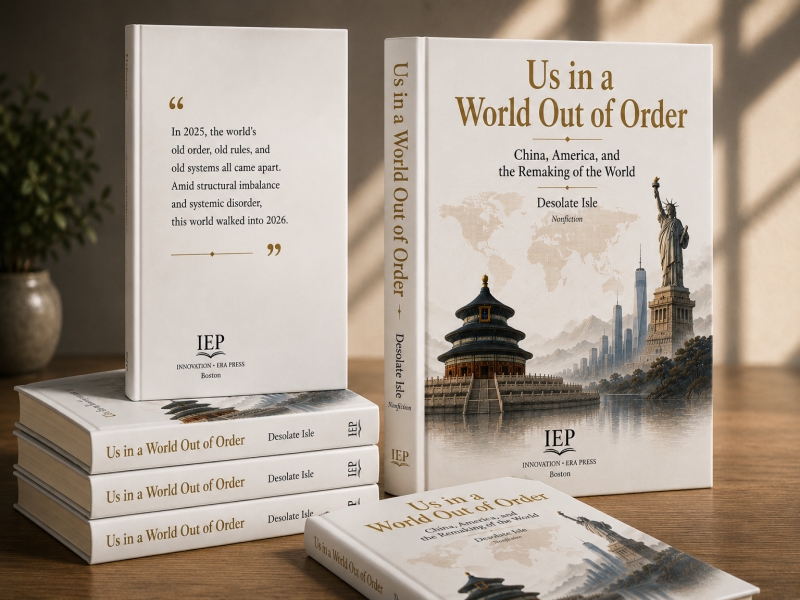
Author’s Note: This article is an excerpt from Chapters 11 and 12 of the book “Us in a World Out of Order” .
The book offers an unvarnished, firsthand account of the border enforcement machine, exposing the human cost of global displacement, corporate prison greed, and the struggle for personal dignity in an increasingly volatile era.