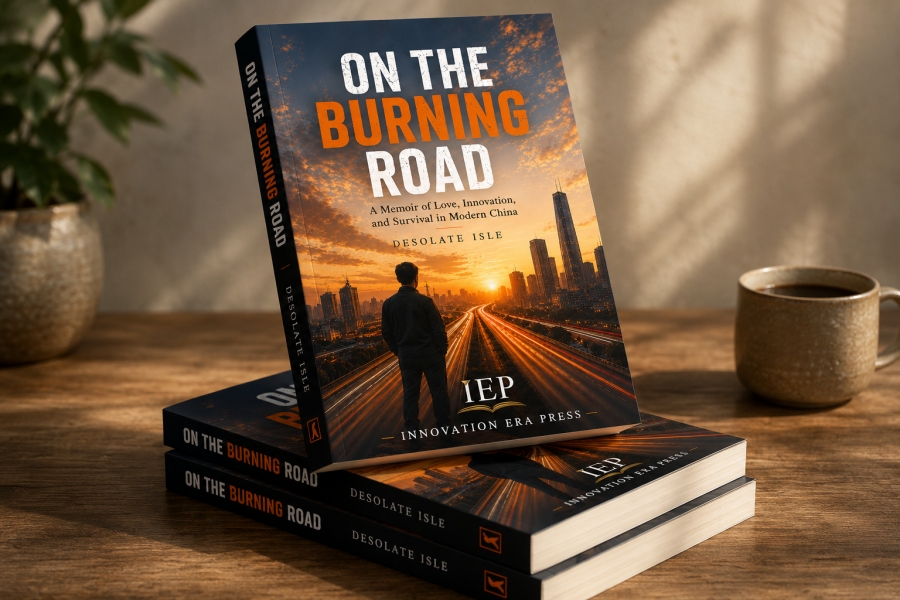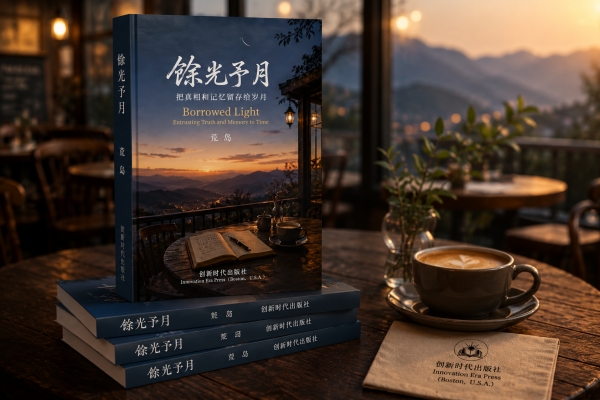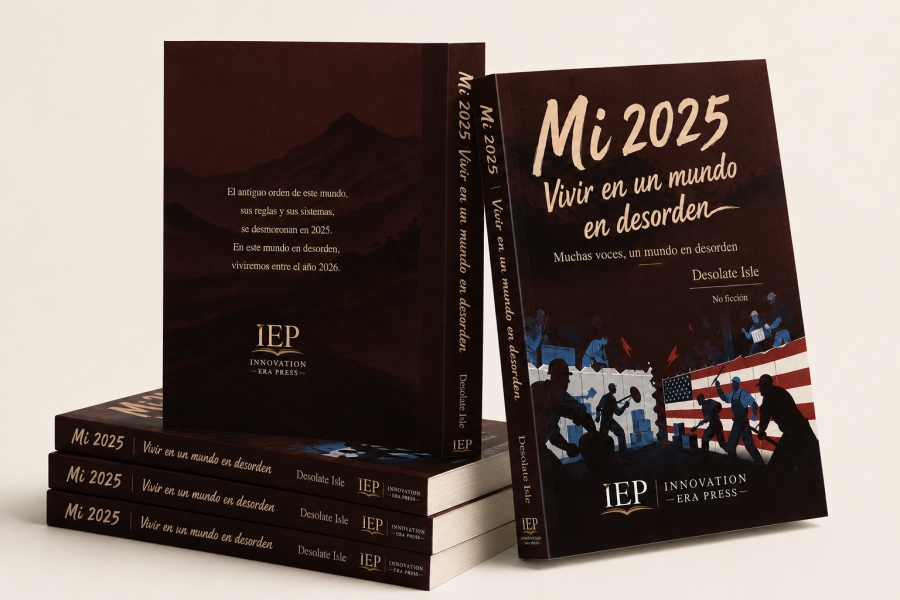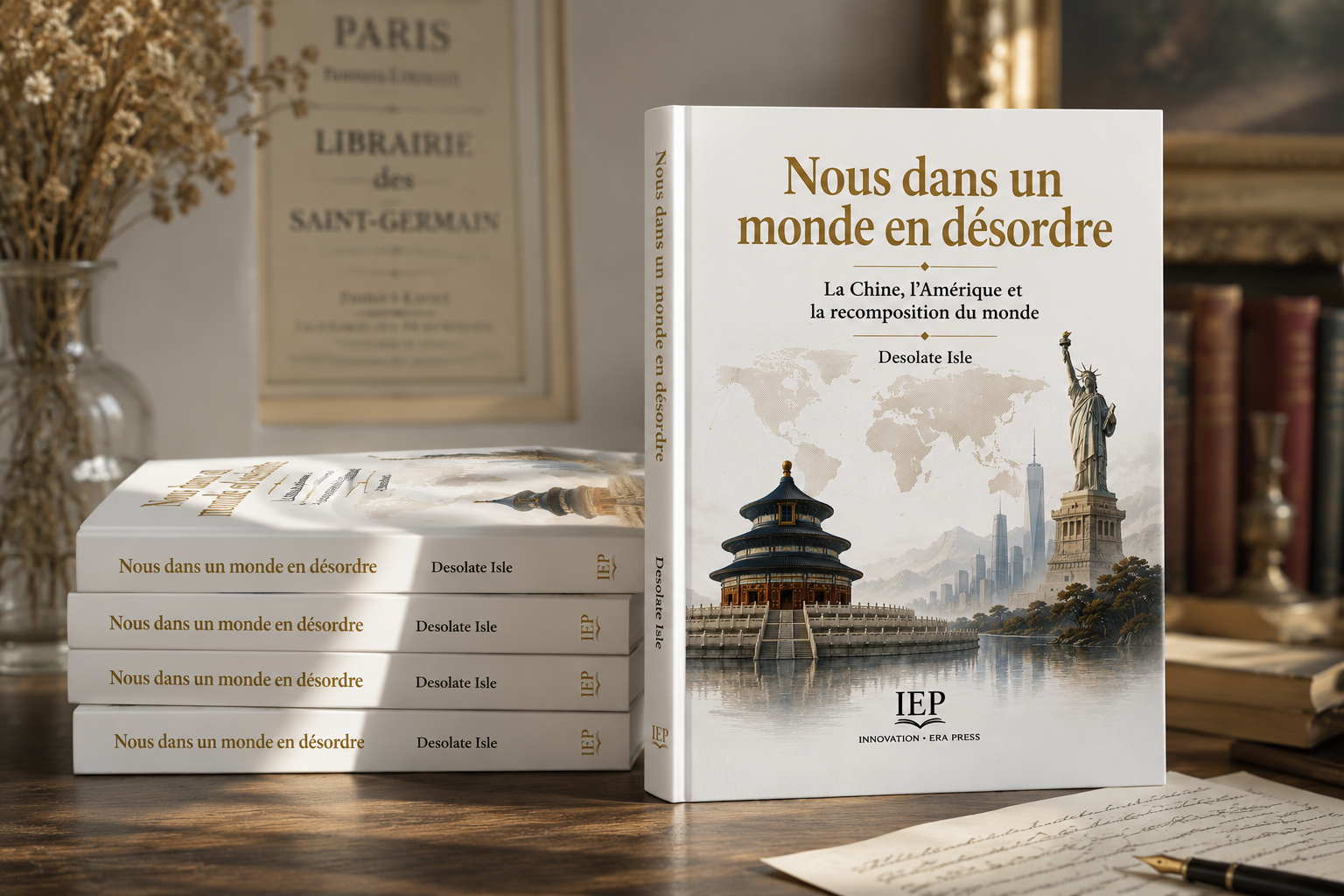
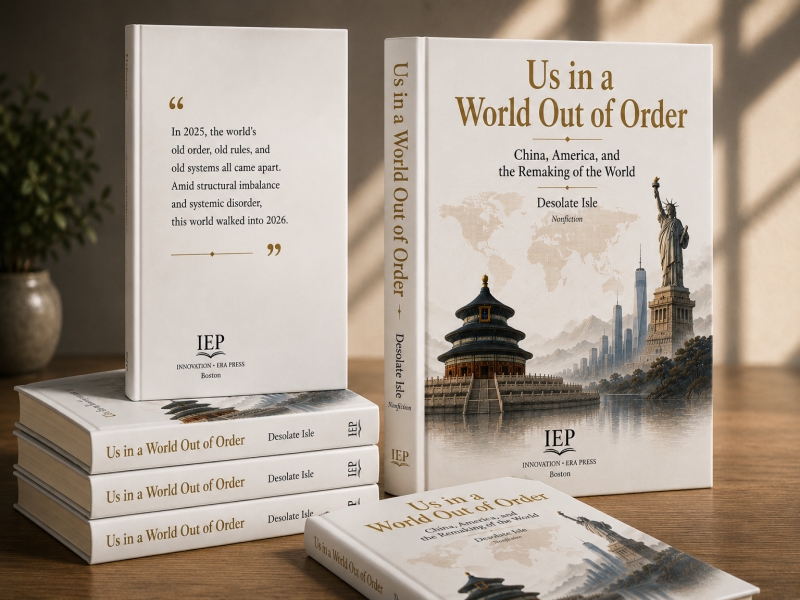
Us in a World Out of Order: China, America, and the Remaking of the World—the English edition of the Chinese original—is now formally available to English-language readers across the United States and Europe. Published by Innovation Era Press.
E-book — ISBN: 979-8-950761-12-6 — Buy Now
Paperback — ISBN: 979-8-950761-13-3
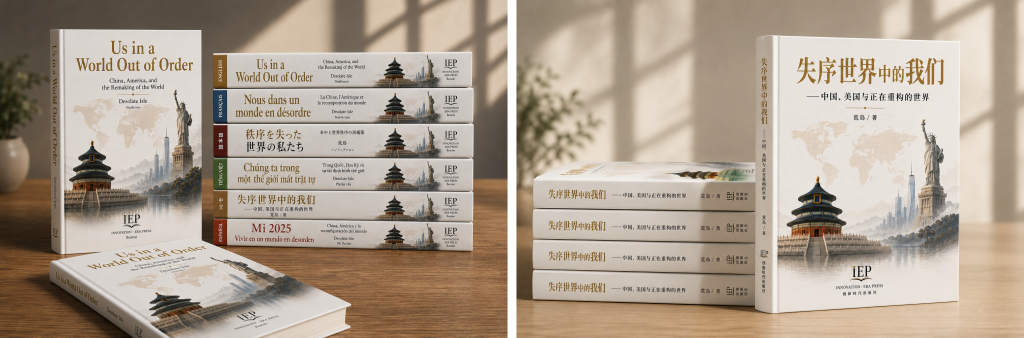
When the old pendulum of globalization slipped loose in an age of decoupling and wall-building, human society entered the violent pangs of a structural disorder. In an era where grand narratives increasingly blind us with glare and illusion, the writer Desolate Isle—an entrepreneur, inventor, engineer, and survivor—has delivered this 210,000-word work of nonfiction, Us in a World Out of Order. Told in the first person through the “I” of lived experience, it records one man’s drift and unceasing questioning through an era’s collapse, drawing a cross-section of a world out of order.
This is not a shallow memoir of exile, nor a mere catalogue of grievances. What sets it apart is the rare joining, within a single volume, of two worlds seldom placed together: the cold precision of political procedure on one side, and the solitude of individual fate on the other. On one hand stand the systems, the protocols, the borders, and the bureaucracies; on the other, one concrete human being, and the many distinct people he meets along the way.
Part One: From the Siege of the Inner Demon to the Road of No Return
The narrative opens in a cramped room in Los Angeles, barely eight square meters. Its tenant, Desolate Isle, straps on a back brace to earn his living, driving for Uber through the smoke of a foreign season of brush fires, completing 1,495 fares in seventy-six days to gather what money he can. On the eve of the Lunar New Year, in a dream, he tells a figure in black how, in running his company, he had gone from refusing to yield to yielding at last. The figure answers: “It sounds as though you have fallen into one interlocking snare after another, and even I am powerless to help you out. Perhaps you should ask God what to do.”
Facing the two devils a person may meet in a lifetime—the demon within and the devil without—Desolate Isle, a thinking man with millions of words behind him, cannot walk clear of the fall even with his eyes open. In the end, breaking the vow he had set down in black and white, he sets out on what he himself calls the road of no return. It is this very road that threads together the fates of many, against the backdrop of decoupling and wall-building.
Part Two: The Silent Machinery of the State, and the Clamor of Innovation
Deep in a range of closed, quiet, empty mountains, a leading private-sector innovator seeks a partnership with a monopolistic, flagship state-owned firm. Even with a national science-and-technology strategy and its political mandates pushing the effort forward, the whole thing halts on a single line: “To do little, or nothing, is the perfect way to avoid taking responsibility.”
Waiting, with nothing to be done, Desolate Isle stands in the vast, imposing courtyard of the subsidiary and looks out at the mountains—the finest sunrises, the finest sunsets, the mist wreathing the peaks after rain. He has no heart for any of it. He looks down instead at the planted weed carpeting the lawns: Bagen grass, its blades stiff and thorny, green gone to yellow, unsightly, and no good for walking or sitting on.
Elsewhere in the book, the pages on the woman he calls “Anna, the elegant lady,” offer the opposite. It is a rainy afternoon: star magnolias in small white blooms, pink trumpet trees hung with downturned bells of orange-red, and at the end of Route 66, the coast at Santa Monica, its sweeping lawns and tall straight palms clean and fresh. The two scenes are set against each other without a word of comment; the meaning is all in the placing.
From Abing—barbershop owner and barber both—to the Hunan man driving for Didi, to Desolate Isle himself, branded a “Dishonest Person Subject to Enforcement” and placed under an Order Restricting High Consumption, deciding on the spot that he must leave China at once—these conversations and events come together into a modern scroll of Along the River During the Qingming Festival. Here lies the “triathlon” and the “three treasures” of getting by, of run 和 zou xian.
Part Three: All Risk Yields to Survival — Inside an American Immigration Prison
The high point of the book’s twenty-two chapters comes on the road of flight, where the author is pushed along against his will. The irony is sharp: at the very moment he sets out to cross the border unlawfully, he is cheated by smugglers. Caught in a bind where he must at all costs avoid overstaying, he steps into the machinery of America’s new immigration policy as the holder of a lawful visa. Then, on the strength of a single frank remark spoken in the “dark room” simply to keep himself alive, the U.S. government—on the ground that he is eligible for asylum—locks him away in a prison for undocumented migrants.
The story swings from luck blown out of all proportion to the despair of a procedure with no exit; from the cold, perpetually lit “foil room” to the camp-like warehouse prison where fungal infections crack the skin; from the courtroom where the government’s attorney holds him to be no more than “an alien who has arrived in the United States,” to the judge who concedes a total lack of jurisdiction. It moves from the ruling that “Hong Kong belongs to China, so you may go to Hong Kong,” to the ICE officers who refuse to let a Chinese national buy his own ticket to fly there; and from a seven-hour interdepartmental interrogation no one saw coming, to the cold line: “Because you meet the conditions for asylum, we must detain you and take away your freedom.”
The handcuffs and leg-irons of procedure, the statistical absurdity of officials filling a quota, the boiled rations from which the contractor takes his cut, head by head, and the crowd of zou xian travelers who count the loss of freedom as the price of earning American dollars—the leaps and reversals of this section form the heaviest stretch of the book. When he was at last sent away, the other detainees saw him go with applause—a writer who had asked, in the end, to be sent “home.”
Through a meeting arranged by the child of a high official and an encounter with a young man just out of prison, the author turns his wandering into a book. Pushed and pulled along, Desolate Isle writes: “I am like a fallen leaf, drifting where the wind blows and the water flows; like a thin thread, stringing together the world and the fates within it.”
Part Four: Lawful Exits and Entries, and Standing Once More Beneath a Dangerous Wall
In the chapter “The Dangerous Wall,” Yueqing, from the upper reaches of society, says: “These past couple of years, I too have thought more about what has really gone wrong with this society. Speaking from the heart—a family like ours, three generations brave and loyal to the country and to society, and yet we must deliberately hide ourselves in some corner out of the light.” Ah Tie, from the bottom, counters: “I’ve got a record from a fight when I was young and foolish, and a bad-credit history from unpaid debts. The government’s and the platforms’ big-data methods have locked me down so tight it’s as if I’m still in prison, with no end in sight.” One above, one below—both shut inside the same invisible wall.
At the Shenzhen Bay Port, in the space of five weeks, the author becomes, twice and uneasily, an uninvited guest in Hong Kong, only to get clear of that dangerous wall. From there his writing follows the track of his wandering: Singapore, Malaysia, Thailand, Vietnam, Cambodia—the survival of Chinese abroad, the Chinese in the markets of Southeast Asia, the different people and different things caught in one shared fate, all set down on the page.
In the Postscript, Desolate Isle grants that he has walked the road God set him upon. Yet a close reading shows that this road is no myth, no superstition, no stroke of luck. A single remark from a Vietnamese—that high city housing prices do not keep ordinary people from living well—sends him into the country twice to see for himself. Canada, for all the data-nets of the Five Eyes, opens its gates to him. Japan, with startling speed, grants him a freelance artist’s residency in a mere twelve days.
The book writes people, events, and landscapes; it writes home, country, and the way of the world; its contents are dense. The author sets down three poems of his own—a qijue quatrain, “The Last Light Given to the Moon”; a wulü octave, “Autumn Walk through Gakuchō”; and a qilü octave, “Adornment”—of which one couplet, “The Eastern soil, rugged, is versed in its scrolls; the Western wind, light, brushes the pale silk pages,” lingers long after.
Spanning fifteen countries and regions—the United States, China, Southeast Asia, Canada, Japan—and drawing on exchanges with some seventy undocumented migrants, laborers at the bottom, cross-border entrepreneurs, scholars, Vietnam War veterans, and government officials, Us in a World Out of Order is at once a book for the general reader that touches the raw nerves of ordinary life, and a window onto the social and economic reality of China and America, and onto the societies of North America, Southeast Asia, and Japan.