A new book exposes the reality of immigration detention at the U.S.–Mexico border—and the enormous profits generated by private capital.
Editor’S Note
As America’s political “war on immigration” intensifies and its border-enforcement network grows harsher, immigration is no longer merely a matter of border control or legal dispute. It has evolved into a system in which state coercion and private profit reinforce one another.
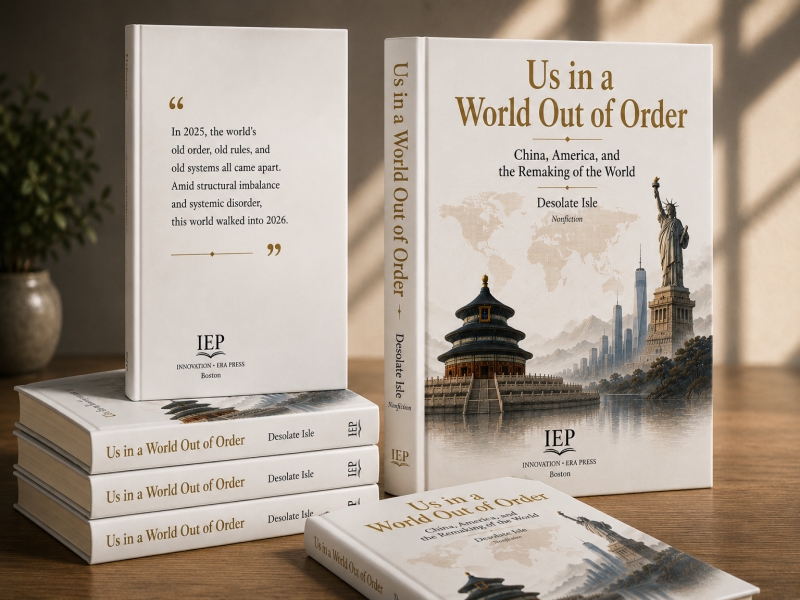
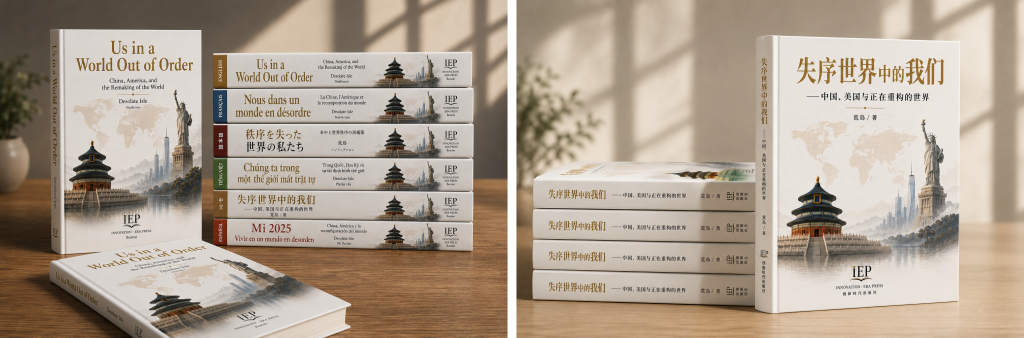
In his new book, Us in a World Out of Order, the author turns his attention to the neglected corners of the U.S.–Mexico border. Drawing on his own experience inside a temporary U.S. Customs and Border Protection facility—the so-called “foil room”—and a privately operated immigration prison under contract with U.S. Immigration and Customs Enforcement, he reconstructs a vast network built from cold procedures, commercial exploitation, and the deprivation of human rights. What follows is an account of the book’s central findings and insights.
As Us in a World Out of Order reveals, the “war on immigration” proclaimed by America’s political leaders is not primarily waged against society’s elites or those with the resources to absorb risk. Its true targets are exceptionally vulnerable workers at the bottom of the social order. Whether they are travelers stopped at the San Ysidro Port of Entry or laborers collectively restrained and arrested in Chinese-run warehouses and karaoke clubs in Los Angeles, working people make up the overwhelming majority of those held in immigration detention.
1. The Target: People at the Bottom of Society
Based on observations at the Otay Mesa Detention Center, most of the approximately 1,800 people held there were working-age people of color, between twenty and sixty years old, from Asia, South America, and the Middle East.
The book records the story of Cao Gen, a truck driver from Hebei. Burdened by debt in China after the pandemic and under pressure from his mortgage, he traveled to the United States with his wife. They tried to rebuild their lives through physically demanding work—packing goods for $100 a day and driving trucks—only to be swept up together in a routine raid.
There are also Xiao Luo, from Fujian, and the married couple Lao Yang and his wife. Each lost nearly everything because of industrial change in China, P2P lending traps, or debt crises. They borrowed tens of thousands of dollars in the hope of finding one last chance to survive. In the grand theater of political declarations and border warfare, these people become the “spoils” most easily captured and punished by the machinery of the state.
2. Recasting Survival as Crime
Within the political narrative of this immigration war, enforcement agencies attempt to recast everyone they arrest as an illegal invader or criminal who threatens national security. Yet Us in a World Out of Order presents extensive firsthand evidence of a harsher truth: most detainees are not criminals in any meaningful sense.
Many entered with valid visas. Others obtained lawful employment authorization documents and Social Security numbers while their asylum cases were pending. They paid taxes on time and survived by selling their labor.
The author himself held a valid B1/B2 visa and had updated his enrollment in the Electronic Visa Update System (EVUS); his asylum application was already moving through the legal process. Cao Gen and his wife possessed valid work permits and earned their living by driving trucks in compliance with the law. They had not stolen, robbed, or harmed anyone. Their only “wrong” was trying to exchange their labor for food and shelter after economic disaster had left them with nowhere else to turn.
But under a political target of deporting one million undocumented immigrants a year, ICE and CBP blur the boundary between legal and illegal status. The basic struggle to work and survive is recast as serious criminality, turning laborers into casualties of a political performance metric.
3. Exploitation as a Business Model: The Commodification and Physical Destruction of Detainees
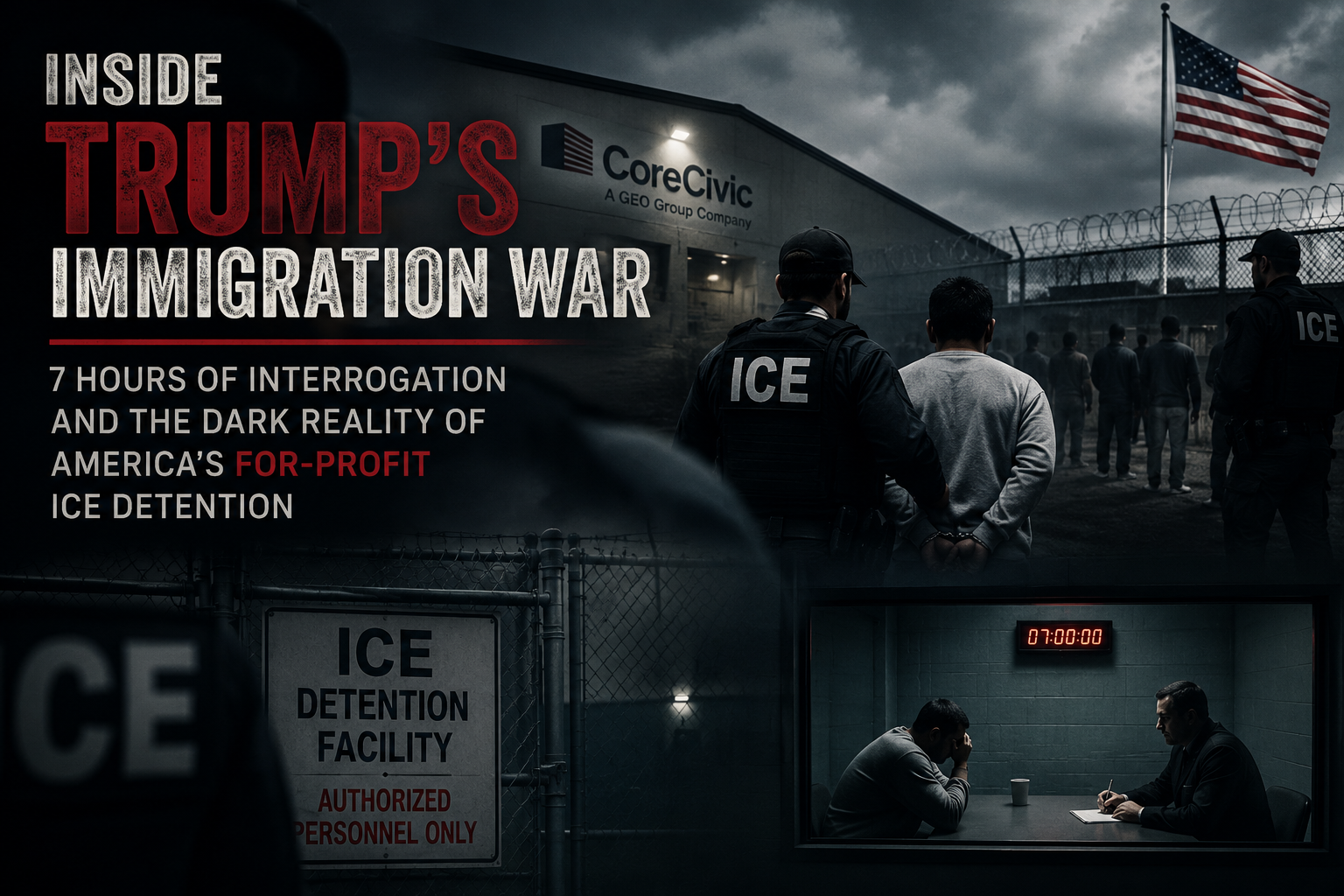
Us in a World Out of Order strips away the institutional language surrounding immigration detention and exposes its commercial logic. The Otay Mesa facility, for example, is operated by a private contractor. In essence, it is a business that receives federal payments based on the number of people held and the number of days they remain in custody.
Under this logic, every detained immigrant becomes a billable commodity on a commercial assembly line. The more people detained—and the longer they remain—the greater the contractor’s profit.
The book describes daily life inside the detention unit:
“As many as 160 people were confined in a warehouse measuring roughly 800 square meters. Some had no choice but to sleep against the bottoms of overturned plastic boat-shaped beds. The cafeteria served old, coarse food that was nearly impossible to swallow. Medicine, basic supplies, and communication with people elsewhere were all converted into expensive commercial services.
“Under glaring white lights that never went out, amid severely restricted space for hygiene and movement, detainees wore poor-quality shared clothing that helped infections spread. Their health deteriorated badly. Fungal skin infections, low-grade fevers, coughing, and flare-ups of underlying illnesses became routine.”
This commercialized system strips immigrants of basic human dignity. Immigration detention becomes fertile ground for capital to extract enormous profits from political fear and enforcement policy.
4. Psychological Pressure and a Procedural Black Hole
Prolonged confinement, endless waiting, and near-total isolation from reliable information inflict profound psychological harm. As depicted in Us in a World Out of Order, the prison offers no effective system of counseling or psychological support. The only spiritual comfort comes from the limited visits of a small number of Christian volunteers from outside.
Inside a detention system with no clear limit, anxiety, despair, and depression become widespread. Lao Yang cries out his wife’s name in anguish at night. A detainee nicknamed “the man with glasses” approaches a mental breakdown inside the bleak desert prison. Depression and hopelessness spread through the cells like a malignant growth.
Extended exposure to this alienating environment produces extreme psychological stress. Suicides and suicide attempts occur repeatedly across immigration detention facilities. By severing outside contact, cutting off telephone access, and depriving people of any clear understanding of time or process, the state machinery gradually wears down individual will.
5. The Asylum Paradox: Imprisonment in the Name of Protection
The book also exposes an absurd contradiction at the heart of the American asylum system. A person believed to face potential danger in their country of origin—and therefore supposedly in need of safety and protection from the United States—enters the American legal process only to have their freedom immediately taken away and to face indefinite confinement.
During questioning at the border, the author instinctively said only that he was “afraid to return to mainland China but could go to Hong Kong.” CBP and ICE then placed him directly into the asylum-detention process.
Asylum should defend fundamental human rights. Within a mechanized and politicized enforcement system, however, it can become imprisonment without a foreseeable end. Millions of cases remain backlogged. Immigration courts pass responsibility from one office to another, while judges and government attorneys cite “lack of jurisdiction” or “incomplete procedure” to keep people locked inside the detention system.
The system does not appear to care whether an individual genuinely needs asylum. It treats the person as an instrument for keeping the process in motion and meeting enforcement targets.
6. The Trap of Being Unable to Leave
The deeper absurdity is that even when detainees abandon their asylum claims, give up any right to remain in the United States, and offer to buy their own tickets to a city under the jurisdiction of their home country, such as Hong Kong, this simple and reasonable request can still be blocked by administrative procedure.
In the cases recorded in Us in a World Out of Order, ICE and the immigration courts shift responsibility back and forth. Requests for “voluntary departure” are repeatedly denied, and detainees are forced into court proceedings that may last months or years. Those who want to stay cannot stay; those who want to leave are not allowed to leave.
Even after a judge issues a removal order, ICE’s travel unit may continue the detention on the grounds that the person “does not qualify for voluntary departure” and “must wait for official arrangements.” Caught in this procedural swamp, individuals lose all control over their own fate. They remain trapped between the gears of an immense state bureaucracy, unable to build a life and unable to leave.
Conclusion
As a work of nonfiction combining literary force with sociological criticism, Us in a World Out of Order strips away the disguises of political rhetoric through an intimate and unsparing perspective. It portrays more than individual humiliation and struggle at the border. It offers a disturbing portrait of modern state coercion, chains of private profit, and legal procedures alienated from their stated purpose.
In an age marked by uncertainty and the breakdown of order, Us in a World Out of Order does more than document imprisonment, freedom, and survival. It poses an urgent question to readers everywhere: When political targets and corporate greed are placed above humanity, where can individual dignity and human destiny find a place in this “world out of order”?
About The Book
This article is adapted from Us in a World Out of Order, a new work of nonfiction by Desolate Isle, published by Innovation Era Press. Told from a first-person perspective, the book takes readers inside U.S.–Mexico border enforcement and privately operated immigration detention centers. Through the experiences of dozens of immigrants from different backgrounds, it records some of the most authentic—and heartbreaking—struggles for survival in our time. The book is now available worldwide.